
- Structural Beam: Footing / Stump
- Structural Beam: Hall
- Structural Beam: Building
- Stainless Steel: Railing
- Stainless Steel: Door Grill
- Stainless Steel: Window Grill
- Awning
- Water Proofing: Epoxy
- Water Proofing: Tiles
- Turbine: Turbine Installation
- Turbine: Netting Ceiling
- Home & Industrial Roof
- Fixing Pipe Leaking
Building

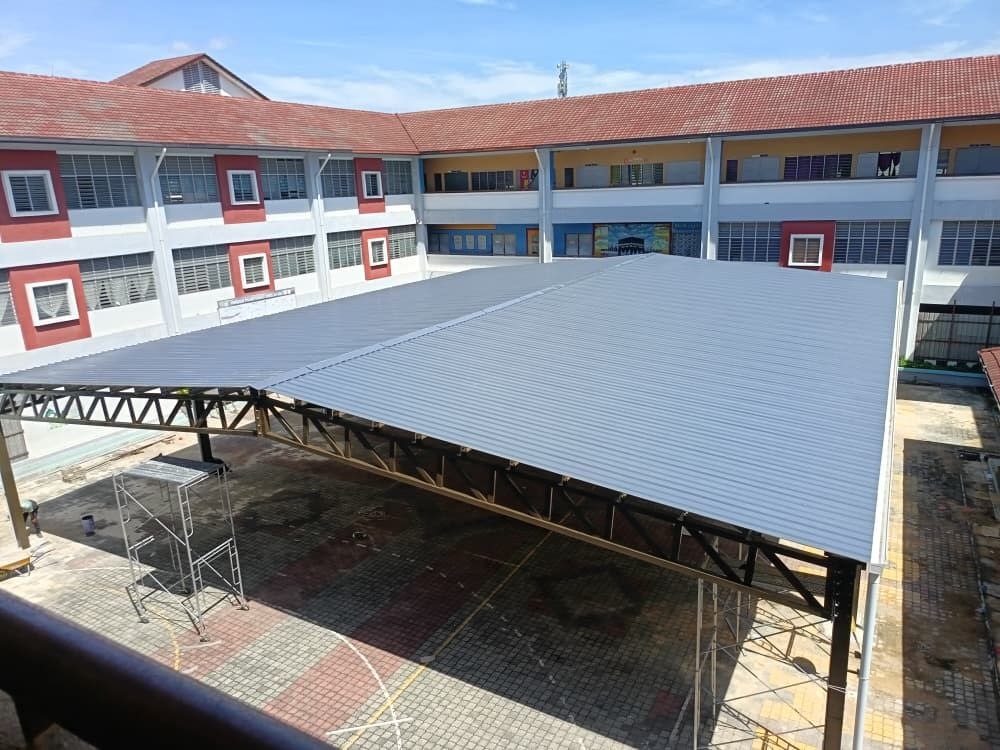
A structural beam is a horizontal or inclined building component designed to withstand loads applied laterally along its length, transferring weight from slabs, roofs, and upper walls to vertical supports like columns and foundations.
Primary Functions
Load Transfer: Safely channels bending moments and shear forces from upper structural elements down to the foundation.
Structural Stability: Prevents sagging, deflection, and collapse under heavy live loads (occupants, furniture, equipment) and dead loads (the permanent weight of the building materials).
Open-Span Creation: Enables wide interior spaces by spanning large distances without requiring intermediate support walls.
Common Types of Structural Beams
Reinforced Concrete Beams: Cast-in-place or precast concrete combined with steel reinforcement bars (rebar) to handle both high compressive and tensile stresses.
Steel Beams (I-Beams / H-Beams): Rolled structural steel shapes offering exceptional strength-to-weight ratios, standard in commercial skyscrapers and industrial warehouses.
Timber Beams: Traditional solid sawn lumber or engineered wood products (such as glue-laminated timber or laminated veneer lumber) frequently used in residential construction.
Composite Beams: Systems where steel beams and concrete slabs work together using shear connectors, maximizing the compressive strength of concrete and the tensile strength of steel.
Key Design Considerations
Span Length: The open distance between vertical supports dictates the required depth, thickness, and material strength of the beam.
Load Calculations: Structural engineers analyze both dead loads (permanent structure weight) and live loads (transient forces) to size the beam correctly.
Deflection Limits: Beams must possess adequate rigidity to prevent excessive sagging, which can otherwise crack drywall, finishes, or masonry elements above and below them.