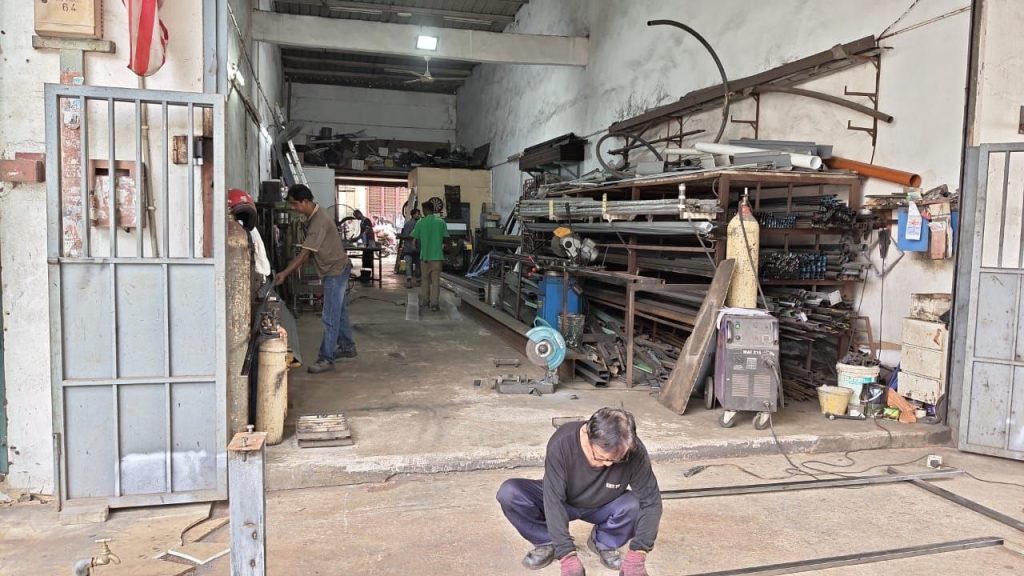
- Structural Beam: Footing / Stump
- Structural Beam: Hall
- Structural Beam: Building
- Stainless Steel: Railing
- Stainless Steel: Door Grill
- Stainless Steel: Window Grill
- Awning
- Water Proofing: Epoxy
- Water Proofing: Tiles
- Turbine: Turbine Installation
- Turbine: Netting Ceiling
- Home & Industrial Roof
- Fixing Pipe Leaking
Door Grill
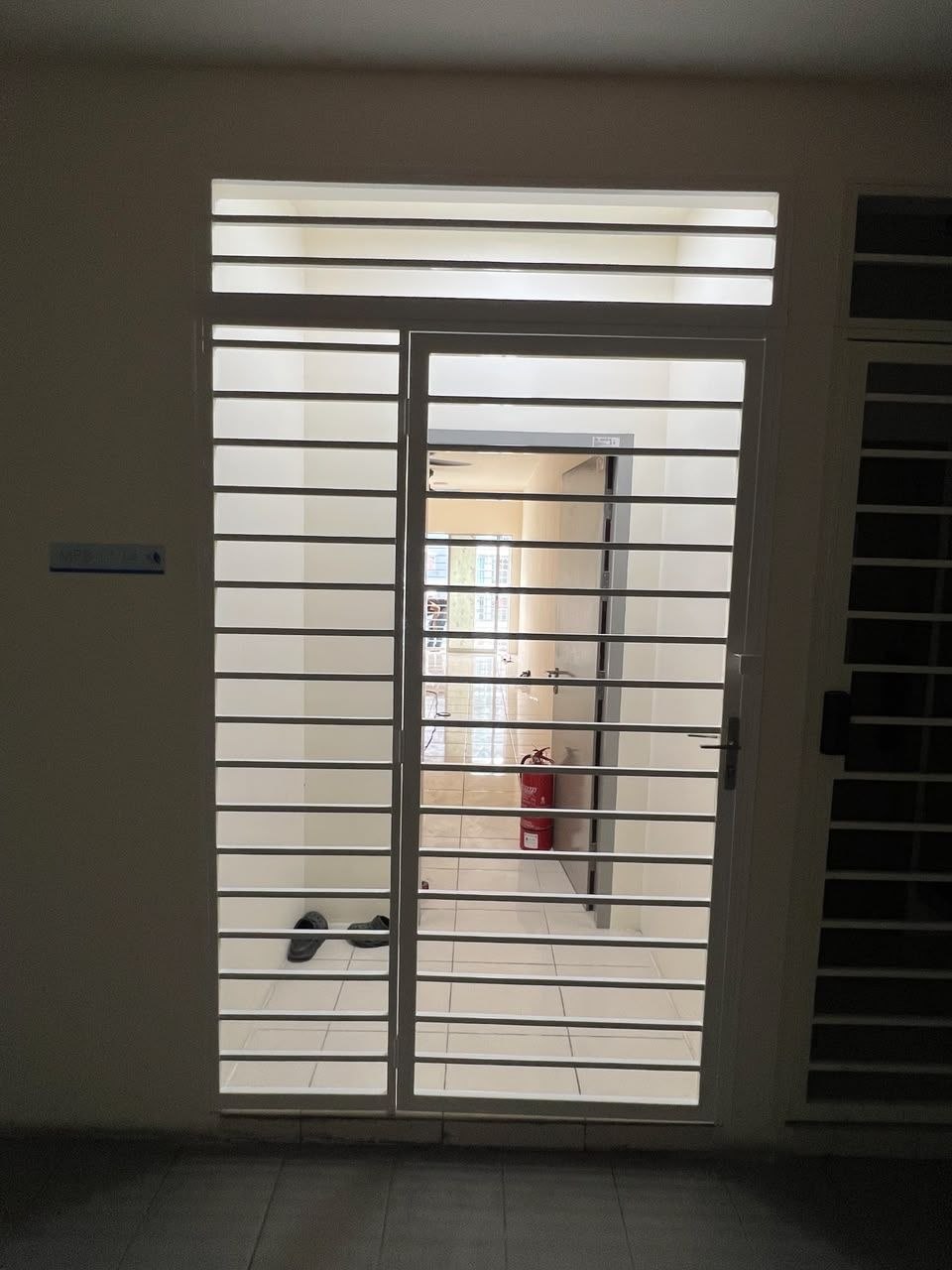
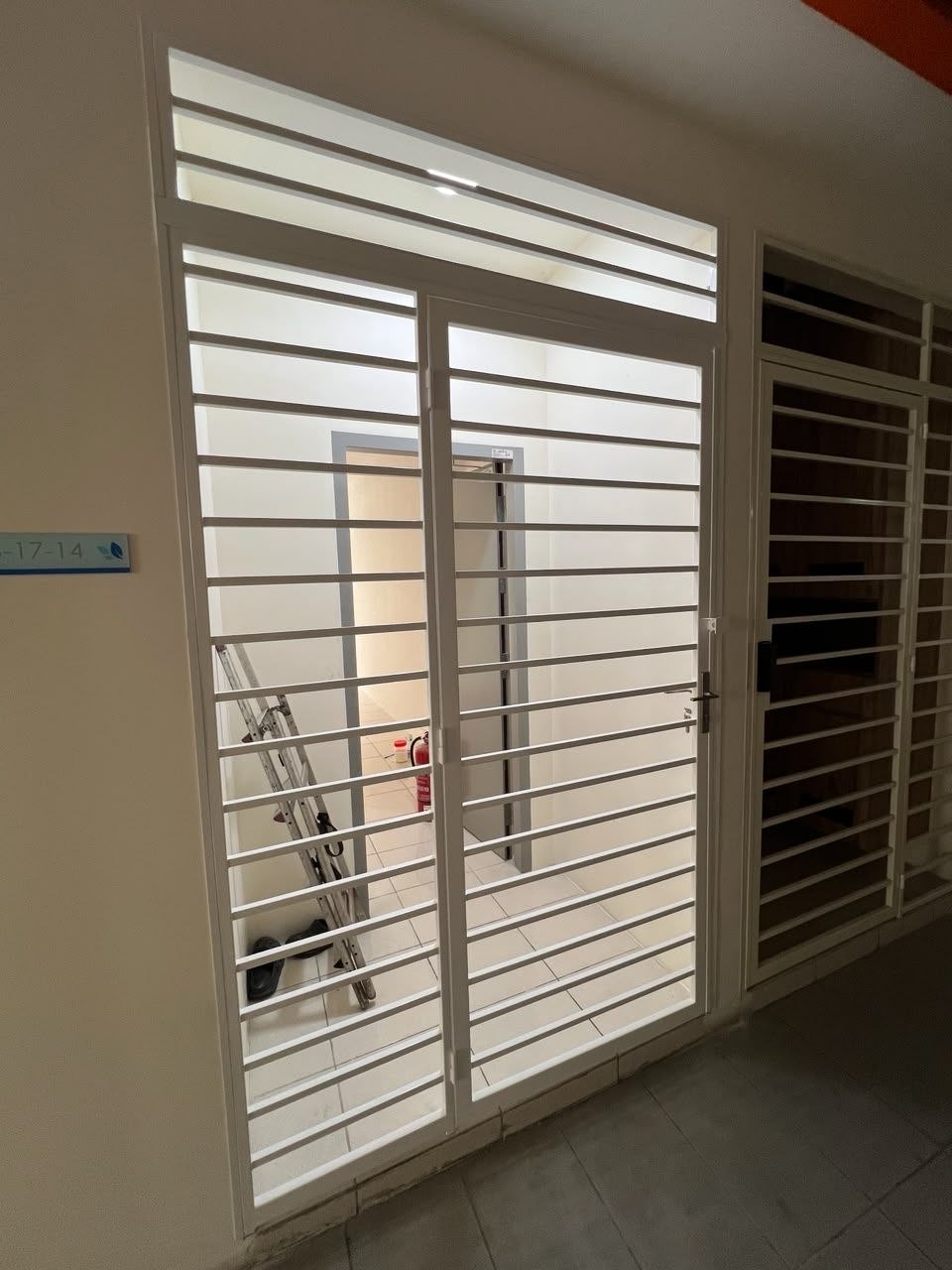
Door grill refers to the fabrication and assembly of protective, decorative metal or wrought-iron barriers installed on exterior or interior doors. These structures serve primarily to enhance home security, improve ventilation while keeping doors open, and add an architectural or aesthetic element to an entrance.
Core Components
Frame: The outer structural perimeter (usually made of rectangular hollow steel or iron tubing) that anchors securely into the door jamb or concrete wall.
Infill Bars/Grids: The primary vertical, horizontal, or decorative pattern bars welded inside the frame to prevent intrusion.
Hinges and Locking Mechanism: Heavy-duty, tamper-proof hinges and a dedicated lockset or deadbolt system independent of the main door lock.
Mesh Screen (Optional): Expanded metal or fine wire mesh attached behind the bars to block insects and dust while maintaining airflow.
Common Materials Used
Mild Steel / Hollow Sections: The most common and cost-effective material; easy to cut, bend, and weld.
Wrought Iron: Used for traditional or ornate scrollwork; highly durable and malleable when heated.
Stainless Steel: Rust-resistant and ideal for coastal or high-humidity environments, though more expensive.
Aluminum: Lightweight and corrosion-resistant, typically used for lighter security screen doors.
Typical Fabrication Process
Measurement and Design: Precise sizing of the door opening, factoring in clearance for handles and the main door swing.
Cutting and Shaping: Cutting metal frames and infill bars to size using saws or plasma cutters, and bending decorative scrolls if required.
Welding: Tacking and fully welding the internal bars to the outer frame to create a rigid, unified panel.
Grinding and Smoothing: Smoothing down rough weld joints using an angle grinder for a clean, seamless finish.
Surface Treatment and Coating: Applying an anti-rust primer followed by powder coating, spray painting, or enamel finish to protect against weather elements.